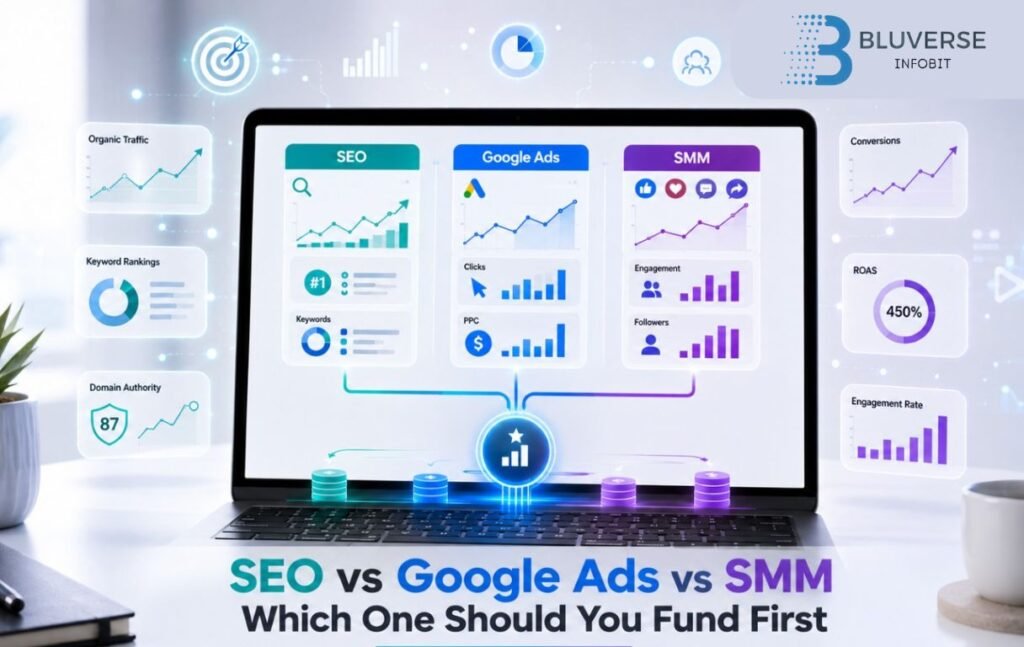
SEO vs. Google Ads vs. SMM Which One Should You Fund First
Introduction Every business in the world wants more exposure, more leads, and more sales. However, there is one thing that all successful marketing channels have in common: content. Since content is the medium for how your message gets delivered, your success on Google, paid ads or social media is dictated by the quality of your content. That is why many business owners raise a pragmatic question: SEO or Google Ads or Social Media Marketing (SMM) which is better to invest in first? Each channel uses content differently. Content is king in SEO since it’s all about helpful, search-based content. Google Ads depends on convincing ad text and site content. Engaging both informative and shareable content that grows trust and awareness are the pillars of SMM. The right channel is a function of your goals, your audience and the type of content you can create consistently. Don’t go across too thin and rather focus your budget on the channel that aligns with content strengths and business priorities. Let’s analyze SEO, Google Ads, and SMM one after the other in terms of content. What Is SEO? Search Engine Optimization (SEO) refers to the practice of creating and optimizing content in a way that it can appear in organic search results on Google or other search engines. For example, SEO is not only context or keywords. It means publishing content that matches search intent, solves problems and provides a reason for users to trust your brand. SEO content can include: Good SEO content always positions your site to rank on relevant searches allowing for passive traffic without incurring high CPC costs. Benefits of SEO SEO can provide content benefits with a stronger long-term focus: This is, however, not an instant process, as SEO content takes time to rank and results are therefore generally slow. What Is Google Ads? Google Ads – Google’s pay-per-click advertising service, allowing businesses to display content in front of users immediately. Content is as vital as budget in Google Ads. Your ad copy, headlines, descriptions and landing page copy all contribute to performance. Google Ads content includes: Unlike SEO, your content is immediately visible with Google Ads. Benefits of Google Ads Content based advantages offered by Google Ads include: If your ad copy or landing page content is not great though, then no budget will make that successful. What Is Social Media Marketing (SMM)? Social Media Marketing relies on content execution across social media platforms like Facebook, Instagram, LinkedIn, X (Twitter), and YouTube to drive awareness-building engagement and leads. SMM is highly content-driven. Leverage Posts, Reels, Videos, Carousels on Stories & Community Driven Messaging. Social media content can include: This is exactly why social media marketing (SMM) has been the channel where brands inject personality and establish relationships. Benefits of SMM Social media marketing helps businesses: SMM, on the other hand, is an ongoing task that requires constant content creation to maintain a presence and stay relevant. SEO vs. Google Ads vs. SMM Now, we can study them as per the performance of content in each channel. 1. Speed of Results For speedy content discovery, Google Ads. With google Ads you can run your advertisement within minutes of launching. This is great for quickly testing offers, headlines and landing page texts. SMM can also produce relatively rapid engagement if the content is strong but typically requires a good deal of time to build an audience in the first place. SEO content qualifies for the longest time to see results because search engines need to crawl, index and rank your pages. Winner: Google Ads 2. Long-Term Content Value SEO offers the best value over time for content. A good Blog post, Service Page or guide can send you traffic for months and sometimes even more than a year. This is one of the reasons SEO is perfect for evergreen content. Budget is the pause button of Google Ads. That SMM content can still attract engagement, but most posts are only live for a matter of hours, less if it goes viral or is repurposed. Winner: SEO 3. Brand Awareness SMMS is best at establishing awareness of a brand. Content on social media is made to be seen, shared and remembered. This is helpful, to keep the businesses visible in front of audiences by posting regularly with innovative storytelling. SEO content targets people who are already searching. While Google Ads is more intent-driven compared to other forms of advertising, it tends to be even less about awareness. Winner: SMM 4. Lead Quality Google Ads usually generates leads with the most intent. Ad clicks for someone searching a particular service or product are typically near the bottom of the funnel. This putting extra importance on ad copy and landing page content. SEO also provides great quality leads, primarily because it matches search intent so stably. SMM is widely used to get the colder audiences because it will generally work for nurturing rather than conversion immediately. Winner: Google Ads 5. Cost Efficiency Over time, SEO is typically the cheapest content channel. SEO has a lot of upfront costs writing, optimization and strategy but the traffic is now free to bring into your site, unlike PPC where you pay for every click. In more competitive verticals, Google Ads can be expensive as there is a cost per click. SMM may have lower budgets to start but continuing to produce content reliably takes time and effort. Winner: SEO (long term) When You Should Choose SEO First If your content strategy is focused on growth over the long term, prioritize SEO. It works best when: SEO is especially effective for: SEO is often the right place to jump in, especially if your strong point is generating search-friendly and helpful content. When You Should Choose Google Ads First Choose Google Ads first When your Content Needs Immediate Attention. Google Ads works best when: It is especially useful for: Google Ads is content that converts quickly, if your ad copy and landing pages are persuasive. When You